Market
Castro Valley vs San Leandro: How Do Home Prices and Commutes Compare?
 Tim Fiebig, Castro Valley Real Estate Agent
November 4, 2026 7 min read
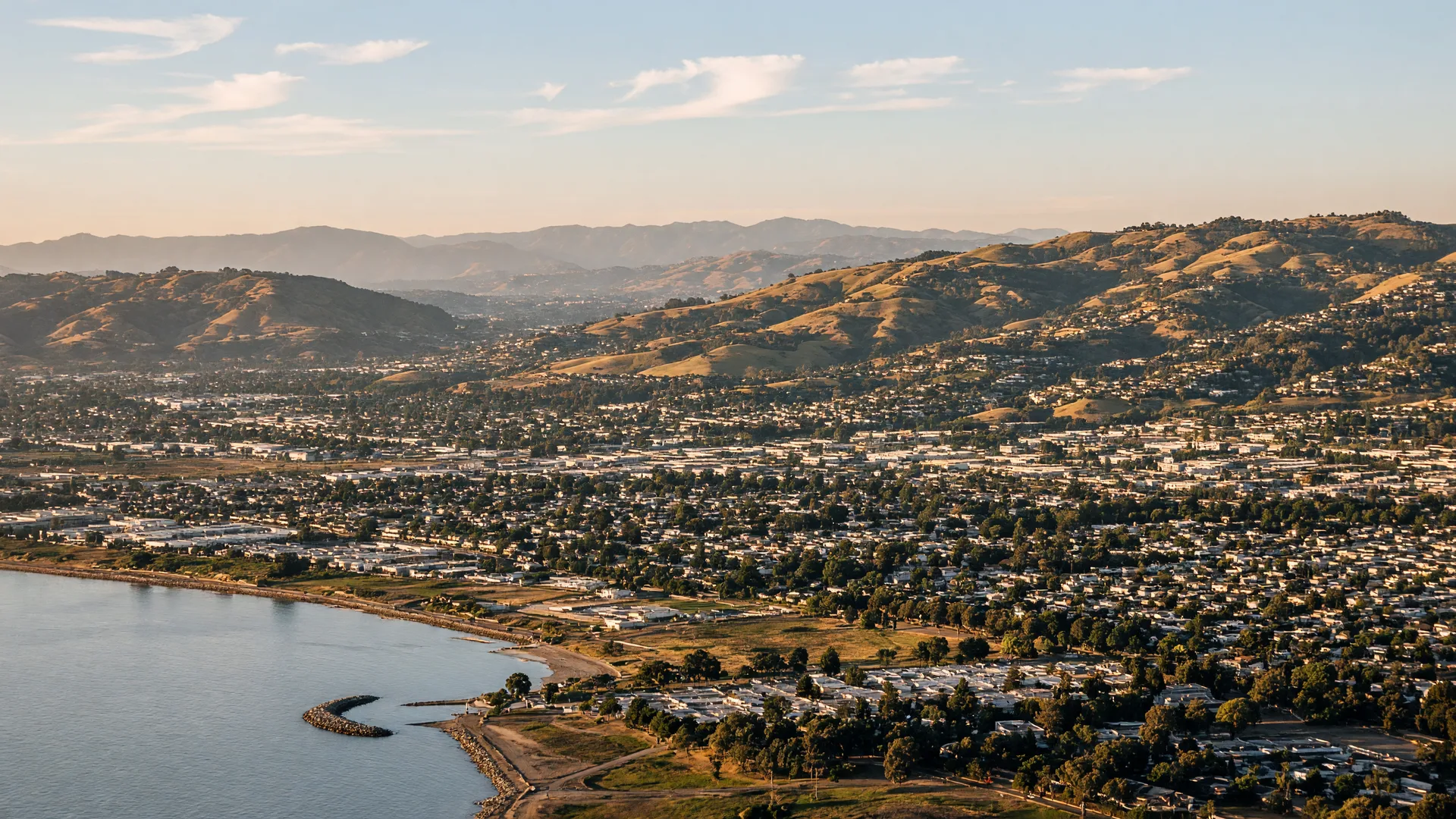
Castro Valley and San Leandro sit about ten minutes apart on the East Bay, yet they are very different markets. Castro Valley homes sell for a median around $1.1 million, while San Leandro's median is $849,595, so the choice between the two towns is usually a choice between budget, commute, and the kind of home you want.
Tim Fiebig, a Castro Valley listing agent who has also priced and sold homes in San Leandro for decades, compares the two towns constantly for buyers and sellers. Here is how the numbers, the commutes, and the costs of each transaction actually stack up.
Castro Valley and San Leandro at a glance
The two towns border each other along the flanks of the East Bay hills, and both feed nearly any job center in the region. The differences show up in price, transit, and the cost of the sale itself.
| Metric | Castro Valley | San Leandro |
|---|---|---|
| Median sale price | About $1.1 million (Homes.com, September 2026) | $849,595, up about 1.4% year over year (Redfin, September 2026) |
| How fast homes sell | About 29 days on market (Homes.com, September 2026) | About 16 days (Redfin city page, three months ending May 2026) |
| BART service | One station (Castro Valley) on the Blue Line | Two stations (San Leandro and Bay Fair) on the Blue, Green, and Orange lines; Bay Fair is the junction where the Dublin/Pleasanton branch splits |
| Rail to downtown San Francisco | Roughly 30 to 40 minutes | Roughly 25 to 40 minutes |
| Drive to downtown Oakland | About 14 miles, roughly 20 minutes | Roughly 10 to 15 minutes |
| Drive to downtown San Francisco | Roughly 35 to 40 minutes | Roughly 30 minutes |
| Drive to San Jose | Roughly 35 to 50 minutes via I-880 | I-880 south, a heavily traveled corridor with rush-hour congestion |
| Documentary transfer tax at sale | County only: $1.10 per $1,000 | County plus city: about $12.10 per $1,000 |
| School district | Castro Valley Unified School District | San Leandro Unified School District |
Sources: public market data for Castro Valley (Homes.com, September 2026), San Leandro market data (Redfin, September 2026, and the Redfin San Leandro city page for days on market), BART station pages for line and service information, and Alameda County and City of San Leandro transfer tax schedules. Drive and rail times are approximate and vary by departure time.
What the price gap actually pays for
A roughly $250,000 difference in median price is not just about the house. Castro Valley is unincorporated Alameda County, sitting against the hills, and much of its housing stock sits on hillside lots with views, larger yards, and quieter streets. San Leandro is a city with a downtown along East 14th Street and shoreline neighborhoods closer to San Francisco Bay, plus a wider mix of house sizes, condos, and older bungalows.
In practice, the same money buys different things in each town. Buyers who want a flat, walkable city setting with easy freeway access often find more options in San Leandro. Buyers who want the hillside, the views, and the open feel of unincorporated land generally land in Castro Valley. Neither is better; they are different answers to the same question about how you want to live.
How the commutes compare
Commute math is the reason many buyers cross between the two towns. San Leandro has two BART stations (San Leandro and Bay Fair) on the Blue, Green, and Orange lines, and Bay Fair is the junction where the Dublin/Pleasanton branch splits off, so riders have more one-seat options. Castro Valley has a single station, on the Blue Line, opened in 1997 and roughly 20 minutes from downtown Oakland and 30 to 40 minutes from downtown San Francisco.
- Drivers. San Leandro sits on I-880 (the Nimitz Freeway) with a shorter run to the Bay Bridge, roughly 30 minutes to downtown San Francisco off-peak. Castro Valley sits on I-580, with downtown Oakland about 14 miles and roughly 20 minutes away. The short I-238 connector links I-580 to I-880 between the two towns.
- BART riders. San Leandro gets a third line to the schedule; Castro Valley gets a faster run to Dublin/Pleasanton on the east. For downtown San Francisco offices, both towns work, with San Leandro a few minutes closer on average.
- San Jose commuters. Both towns feed I-880 south, a corridor that congests heavily in rush hour. Tim's habit for buyers is the same one a pilot uses: drive the actual route at the actual commute hour before you commit, because minutes matter more than miles.
A cost-of-sale difference most buyers miss: transfer tax
On the selling side, the two towns diverge on the documentary transfer tax. Alameda County charges $1.10 per $1,000 of the sale price everywhere. San Leandro adds a city transfer tax of $11.00 per $1,000 (Ordinance No. 2020-08), for a combined rate of about $12.10 per $1,000. Castro Valley is unincorporated, so only the county rate applies.
On a $900,000 sale, that difference rounds to about $9,900:
- Castro Valley: $900,000 × $1.10 per $1,000 = about $990 in transfer tax
- San Leandro: $900,000 × $12.10 per $1,000 = about $10,890 in transfer tax
Whether the seller or buyer pays is negotiated and settled in escrow, and San Leandro's higher city tax is one reason the two towns can differ in the net sheet. Property tax rules, by contrast, work the same way in both: Proposition 13 assessment rules and Alameda County rates apply identically, with the exact amount depending on assessed value and voter-approved local measures. Transfer taxes and tax questions are exactly the kind of thing to confirm with your escrow officer, tax professional, or attorney before you price a home or structure an offer.
How to choose between the two towns
Tim walks buyers through the decision with a short, evidence-based exercise:
- Write down your budget ceiling. If your top number lands near $850,000, San Leandro has more homes in range; near $1.1 million, Castro Valley's selection opens up.
- Test both commutes on a workday. Drive each route at the hour you would actually travel, and check the BART schedule for your destination station.
- List the home features you will not compromise on. Hillside and views point one way; flat, walkable, and bay-adjacent point the other.
- Compare three recent sales in each town. Tim pulls comparable solds in your exact price range so the comparison is apples to apples, not medians to medians.
- Run the cost of the sale. For sellers, the transfer tax and typical closing costs belong in the net sheet before you compare an offer in one town against a listing in the other.
How Tim works with buyers in both towns
As a Castro Valley listing agent who also sells in San Leandro, Hayward, and San Lorenzo, Tim treats the whole East Bay as one market with different price zones. He shares the same preparation standard with sellers in both towns, and he gives buyers real comparable sales from each side of the border instead of a one-town pitch. His Castro Valley neighborhood guide and monthly market report cover the local numbers, and a single conversation about budget and commute usually settles the town question.
Tim also compares homes the way a pilot checks a route: the commute at the time you actually drive it, the alternative when the primary road is closed, and the logistics of getting into and out of the neighborhood. See how that thinking plays out in how a pilot's eye reads a location.
Call 510-708-8700, or send a message, and Tim will pull the recent sales in both towns and talk through which one fits your budget, your commute, and the home you want.
Frequently asked questions
Which town is more affordable, Castro Valley or San Leandro?
San Leandro is the lower-priced market. Its median sale price was $849,595 in September 2026 (Redfin), while Castro Valley's median sits around $1.1 million (Homes.com, September 2026). San Leandro also carries a higher transfer tax at sale, which matters more to sellers than to buyers.
Which town has a faster commute to San Francisco?
San Leandro is a few miles closer to the Bay Bridge and rides BART on the Blue, Green, and Orange lines, with rail service to downtown San Francisco in roughly 25 to 40 minutes. Castro Valley's single station on the Blue Line reaches downtown San Francisco in roughly 30 to 40 minutes. Drive times depend heavily on departure time, so test your actual route.
Is it really more expensive to sell a home in San Leandro than in Castro Valley?
On documentary transfer tax, yes. Both towns pay the Alameda County rate of $1.10 per $1,000, but San Leandro adds a city transfer tax of $11.00 per $1,000, for about $12.10 per $1,000 total. Castro Valley is unincorporated, so only the county rate applies. Confirm the figures and who pays with your escrow officer.
Do property taxes work the same in Castro Valley and San Leandro?
Both towns sit in Alameda County, so the same Proposition 13 rules and county rates apply. The exact amount depends on the home's assessed value and any voter-approved local measures. A tax professional can show the specifics for a particular property.
Which town should I buy in, Castro Valley or San Leandro?
It depends on your budget, your commute, and the kind of home you want: a hillside lot with views versus a city neighborhood closer to the bayfront. Tim can pull recent comparable sales in both towns and walk you through the tradeoffs in about 20 minutes. Call 510-708-8700.
Related reading
- How Buyers Compare Castro Valley Neighborhoods: the evidence-based checklist for weighing commute, school routes, views, lots, and street feel.
- What Is Your Castro Valley Home Worth in 2026?: where the Castro Valley median stands and why online estimates are only a starting point.
- Hayward Executive Airport's Growth and How a Pilot's Eye Reads a Location: how Tim checks commute, conditions, and logistics before he trusts a location.
- Castro Valley neighborhood guide and the current Castro Valley market report.
About Tim Fiebig
Tim Fiebig is a Castro Valley Realtor and Broker-Associate who has helped East Bay homeowners buy and sell since 1978. He works across Castro Valley, San Leandro, Hayward, San Lorenzo, and the Tri-Valley, and leads the Fiebig Team. Call or text 510-708-8700 · timfiebig.com · DRE #00657474 · eXp Realty of California, Inc. | DRE #01878277
Licensed since 1978 · 1,000+ homes sold in Castro Valley alone · eXp ICON Agent. Tim Fiebig, Broker-Associate, DRE #00657474 · 510-708-8700 · eXp Realty of California, Inc., DRE #01878277 · Equal Housing Opportunity.